
Table of Contents
Exploring Massage Therapy Education in Minnesota
In the heart of Minnesota, the wellness movement is fueling a surge in interest for careers in massage therapy. With rising demand for certified professionals, choosing the right massage school in Minnesota becomes crucial for aspiring therapists seeking to make a real difference in clients’ lives. At CLOVR Life Spa Apple Valley, we believe education starts with hands-on experience that prepares you for the spa services Minnesotans love.
While Minnesota does not mandate statewide licensure for massage therapy, local municipalities often require business permits, and professional bodies like the American Massage Therapy Association (AMTA) emphasize comprehensive training. Many Minnesota massage training programs recommend at least 1,000 hours of instruction to build credibility and meet industry standards, ensuring graduates are ready for diverse techniques from Swedish massage to advanced modalities. This foundation aligns with guidelines from the Minnesota Department of Health, promoting safe and effective practices under Chapter 146A.
We at CLOVR are proud to offer the clovr school of massage, a hands-on program integrated directly with our spa in Apple Valley. Students spend their days practicing in real treatment rooms, just like our seasoned therapists–imagine starting with client consultations in the Serenity Lounge, then delivering a relaxing session. Key factors like our 10-month duration and accessible costs make local massage education options approachable, while focusing on massage therapy accreditation minnesota through COMTA standards boosts your resume.
Our curriculum dives into massage therapy curriculum minnesota essentials, from anatomy to spa integration, setting you up for success. Upcoming sections explore fundamentals, detailed coursework, and practical enrollment steps to guide your journey.
Fundamentals of Massage Therapy Education in Minnesota
At CLOVR Life Spa Apple Valley, we see many aspiring therapists curious about starting their journey in a massage school in Minnesota. The fundamentals of massage therapy education here focus on building essential skills through structured programs that prepare you for a rewarding career in wellness. Entry-level massage training in the state typically requires a high school diploma or equivalent, making it accessible for those ready to dive into hands-on learning. These basic massage program essentials emphasize practical techniques tailored to local needs, like spa services in the Twin Cities area, ensuring graduates are competent from day one.
Program durations vary to fit different lifestyles, often ranging from 9 months full-time to 2 years part-time. This flexibility allows students to balance education with work or family commitments. Factors like class schedules, clinical hours, and personal pace influence the timeline, helping you choose a path that aligns with your goals. For instance, full-time options accelerate entry into the field, while part-time tracks provide deeper absorption of material.
The following table compares entry-level program timelines, total hours, and estimated tuition across select Minnesota schools, including CLOVR School of Massage, to help readers evaluate foundational commitments.
| School/Program | Duration | Required Hours | Estimated Cost |
|---|---|---|---|
| CLOVR School of Massage | 9-12 months full-time | 1,000 hours (Includes classroom and clinical) | $12,000-$15,000 (Tuition plus materials) |
| Anoka-Ramsey Community College | 2 years part-time | 1,000 hours (Core curriculum focus) | $8,000-$10,000 in-district (Community college rates) |
Data sourced from school websites and AMTA guidelines; costs approximate for 2024 and may vary. This comparison highlights how CLOVR offers a streamlined, intensive experience for quicker workforce entry, while Anoka-Ramsey provides affordable, flexible community college access ideal for beginners building foundations over time. Understanding these options empowers you to select a program that matches your budget and schedule without overwhelming commitments.
While Minnesota does not issue a statewide license for massage therapists, pursuing education aligns with massage therapy accreditation minnesota standards through bodies like the AMTA, which recommend the national MBLEx exam for professional credibility. Many local municipalities, especially in areas like the Twin Cities, require business permits or city-specific registrations to practice legally. We guide students through these steps to ensure smooth compliance. Here’s a breakdown of key prerequisites:
- Complete a minimum of 1,000 hours in an approved massage therapy curriculum minnesota program, covering anatomy, physiology, and hands-on techniques.
- Pass the MBLEx exam administered by the Federation of State Massage Therapy Boards, focusing on safety, ethics, and bodywork knowledge.
- Undergo a background check as required by local jurisdictions to verify eligibility.
- Obtain any city or county business licenses where you plan to work, such as in Apple Valley.
These steps, drawn from Minnesota eLicense guidelines under Chapter 146A, emphasize client rights and ethical practices in complementary health care. For example, one of our CLOVR students recently aced the MBLEx after their clinical rotations, securing a local permit effortlessly.
Tuition for massage programs in Minnesota generally falls between $8,000 and $18,000, covering instruction, materials, and sometimes exam fees–though variables like in-district rates or program intensity can adjust this. Community colleges like Anoka-Ramsey keep costs lower at around $8,000-$10,000, making education more approachable for budget-conscious learners. Private schools may range higher due to specialized equipment and smaller class sizes. Financial aid options, including scholarships from the AMTA and federal grants, often cover a significant portion; we encourage applying early to ease the investment. At CLOVR, transparent pricing helps you plan without surprises, focusing on value in skill-building.
Our CLOVR School of Massage stands out with its integrated spa training model, blending classroom theory with real-world practice right in our boutique environment. Over 1,000 hours, students master techniques like Swedish and deep tissue, preparing them for massage apple valley mn demands. We create an experience where IT’S NOT ABOUT US, IT’S ABOUT YOU–tailored to southern suburbs’ wellness scene. Graduates often step into roles at local spas, armed with the fundamentals that build lasting therapeutic competency. This hands-on approach not only meets hour requirements but fosters confidence for immediate impact.
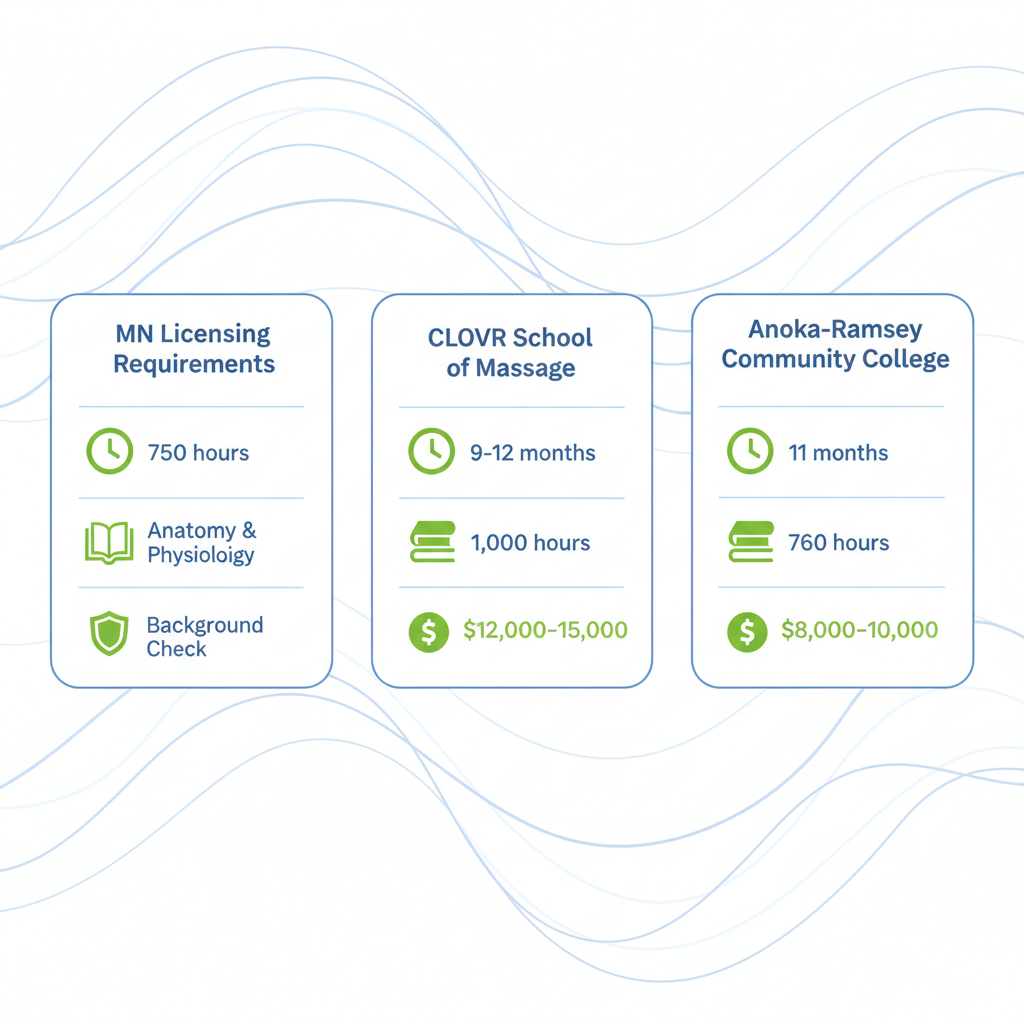
Comparison of Minnesota massage therapy education programs
Building on these program insights, the infographic above visually summarizes key differences, reinforcing how choices like CLOVR’s efficient timeline support your career launch. Whether full-time or part-time, these fundamentals equip you for success in Minnesota’s vibrant massage field, where practical training translates directly to client satisfaction and professional growth.
Accreditation and Curriculum Details for Minnesota Massage Schools
When exploring options for a massage school in Minnesota, understanding accreditation and curriculum is essential for ensuring a strong foundation in this rewarding field. At CLOVR, we believe that quality education sets the stage for successful careers, blending rigorous standards with practical experience.
Understanding Accreditation Standards in Minnesota
In the world of massage therapy accreditation Minnesota, programs must meet specific criteria to prepare students effectively for professional practice. While national accreditation like that from the Commission on Massage Therapy Accreditation (COMTA) is optional, it is highly recommended as it signifies adherence to elevated educational standards. COMTA evaluates schools on curriculum depth, faculty qualifications, and student outcomes, ensuring graduates are well-equipped for the Massage and Bodywork Licensing Examination (MBLEx) and state licensure. In contrast, state approval from the Minnesota Board of Massage and Bodywork Therapy focuses on meeting the minimum 1,000-hour requirement for licensing eligibility, but lacks the comprehensive peer review of national bodies.
Choosing accredited massage programs statewide offers distinct advantages, including transferability of credits and recognition by professional organizations. For instance, COMTA-accredited schools often report higher employment rates for graduates, with data from the American Massage Therapy Association (AMTA) indicating that nationally accredited therapists achieve licensure success rates up to 20% higher than non-accredited peers. This accreditation in Minnesota not only validates program quality but also enhances credibility when seeking employment at spas or clinics.
At CLOVR School of Massage, part of clovr life spa apple valley, we are pursuing COMTA accreditation while maintaining full state approval. This dual approach ensures our students benefit from both rigorous oversight and immediate licensing pathways. The following table highlights key differences among prominent programs, helping prospective students weigh their options.
Comparison of Accreditation Types Across Minnesota Programs
| Program | Accreditation Type | Licensing Impact | Key Benefits |
|---|---|---|---|
| CLOVR School of Massage | COMTA pending, state-approved | Supports MBLEx eligibility – Direct path to state license | Hands-on spa integration – Career readiness focus |
| Ridgewater College | State-approved | Meets 1,000-hour standard – Exam preparation included | Affordable access – Transferable credits |
Based on COMTA and state board data; accreditation status as of 2024.
This comparison underscores CLOVR’s unique edge, where pending COMTA status promises national recognition alongside state compliance, fostering superior career readiness through integrated spa training. Students gain practical exposure in a real-world setting, setting them apart in the competitive job market. As accreditation evolves, programs like ours prioritize ongoing improvements to meet both student and industry needs, ensuring massage therapy accreditation Minnesota remains a cornerstone of professional development.
Core Elements of Massage Therapy Curriculum
The massage therapy curriculum Minnesota follows a structured format designed to build comprehensive skills, typically requiring 1,000 hours split evenly between 500 classroom hours and 500 clinical practice hours. This balance, as outlined by state curriculum standards for massage, ensures students master theoretical knowledge while honing practical abilities under supervision. Programs like those at Ridgewater College exemplify this, with their curriculum allocating dedicated time for anatomy labs and client sessions to meet licensing prerequisites.
Key components include in-depth anatomy and physiology studies, focusing on the musculoskeletal system, nervous system, and kinesiology to understand body mechanics. Students learn how these systems interact during therapeutic applications, preparing them to address common wellness needs without making medical diagnoses. The curriculum also covers essential techniques, such as:
- Swedish massage for relaxation and improved circulation
- Deep tissue work to release chronic tension
- Trigger point therapy for targeted relief
- Prenatal and sports modalities for specialized populations
At CLOVR, we integrate spa-specific modules into our massage therapy curriculum Minnesota, blending traditional education with on-site practice at our facility. This includes training in aromatherapy enhancements and client-centered protocols, aligning with our philosophy that IT’S NOT ABOUT US, IT’S ABOUT YOU. By incorporating real spa scenarios, students develop not just technical proficiency but also the soft skills for exceptional client experiences. Drawing from AMTA guidelines, our program emphasizes ethical practice and business basics, boosting graduate employability. This holistic approach ensures our students emerge ready to contribute meaningfully to wellness communities across the state.
Practical Steps in Minnesota Massage Therapy Training
At CLOVR School of Massage, we understand that pursuing massage therapy education in Minnesota involves more than just classroom learning. It’s about gaining practical skills that prepare you for real-world spa environments. We guide students through a structured path that emphasizes hands-on experience and seamless integration into professional settings like our apple valley spa experience. This approach ensures you’re not just trained, but truly ready to deliver exceptional care.
Preparing for and Navigating Massage School Admissions
Embarking on your journey to a massage school in Minnesota starts with thorough preparation for admissions. We recommend beginning by researching programs that align with your career goals, such as those offering strong ties to local spas. Key prerequisites often include a high school diploma or equivalent, basic anatomy knowledge, and sometimes a background check. At CLOVR, we streamline this process to make it accessible for aspiring therapists in the Twin Cities area.
The application process typically involves several numbered steps. First, submit your application online or in person, including transcripts and a personal statement outlining your interest in massage therapy. Second, prepare for an interview where you’ll discuss your motivations and any prior experience. Third, complete any required entrance assessments, like a writing sample or health screening. For example, drawing from Anoka-Ramsey Community College’s model, applications open year-round with priority deadlines in spring for fall starts, allowing time for financial aid planning.
Credit transfers are a common concern for students switching programs or building on prior education. In Minnesota, ensuring your previous coursework meets massage therapy accreditation minnesota standards is crucial for smooth integration. Policies vary by school, but they generally evaluate transcripts for relevant hours in anatomy, physiology, or kinesiology. This flexibility helps reduce time and costs, especially if you’ve completed community college courses.
| Program | Transfer Policy | Accepted Credits | Process Ease |
|---|---|---|---|
| CLOVR School of Massage | Case-by-case review | Up to 500 hours from approved schools | Streamlined with spa focus |
| Anoka-Ramsey | Articulation agreements | Up to 300 hours from community colleges | Moderate process with standard forms |
As shown, CLOVR’s case-by-case review with prior learning assessments offers up to 500 hours of credit, making it easier for students to advance quickly. This spa-focused evaluation prioritizes practical experience, setting us apart from more rigid community college processes. We work closely with applicants to review credits efficiently, often within weeks, ensuring you can start building toward licensure without unnecessary delays.
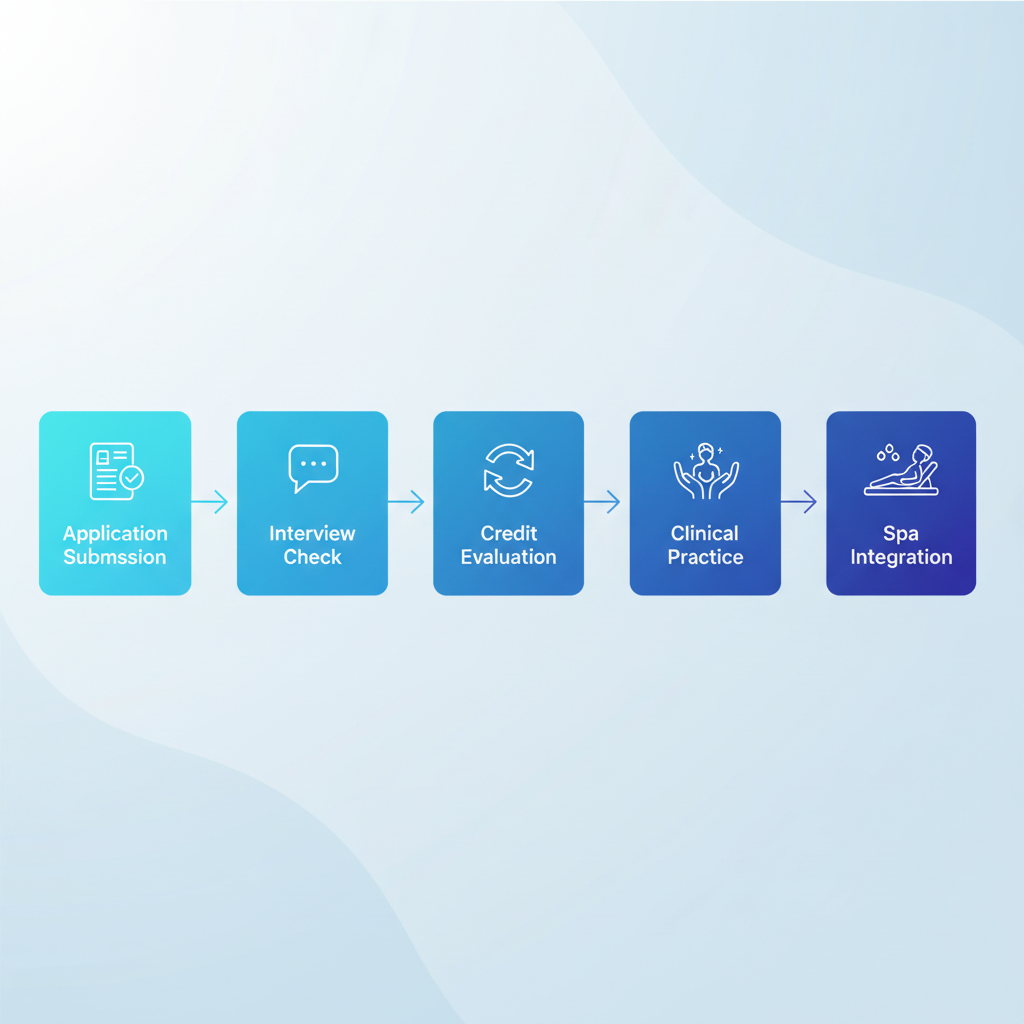
Practical steps for admissions and hands-on training in Minnesota massage programs
Hands-On Training and Spa Integration
Hands-on training forms the core of any massage therapy curriculum in Minnesota, transforming theoretical knowledge into tangible skills. We emphasize practical training in Minnesota schools through supervised clinical hours, where students apply techniques like Swedish massage and deep tissue work on peers and models. These sessions build confidence and precision, essential for future client interactions.
In our program, clinical practice begins early, with at least 500 required hours including 100 in direct client contact, similar to Ridgewater College’s emphasis on supervised practice to ensure competency. Mock sessions simulate real appointments, teaching draping, positioning, and client communication. We cover a range of techniques, from trigger point therapy to prenatal adaptations, answering what massage techniques are taught in Minnesota school curricula.
Specialized modules address therapeutic techniques, such as sports recovery or aromatherapy integration, tailored to Minnesota’s wellness landscape. These align with state licensing needs, preparing you for exams through the Minnesota Board of Massage and Bodywork Therapy. Our curriculum bridges to spa services by incorporating client consultation skills and hygiene protocols, vital for environments like boutique day spas.
Spa integration is a highlight at CLOVR, where on-site rotations provide real-world exposure. You’ll assist in actual sessions, learning to customize treatments based on client feedback, much like the hands-on massage program steps we follow. This prepares you for roles in settings offering everything from relaxation massages to advanced aesthetics. To balance school with work, we offer flexible evening classes and part-time options, helping you maintain momentum without burnout.
IT’S NOT ABOUT US, IT’S ABOUT YOU–our training equips you with the tools to create meaningful experiences in Minnesota’s spa industry. By the end, you’ll be ready to contribute to places like our Serenity Lounge, blending education with professional practice seamlessly.
Advanced Considerations for Massage Therapy Programs in Minnesota
At CLOVR School of Massage, we offer advanced paths that build on foundational skills, preparing students for specialized roles in therapeutic and spa settings across Minnesota. Our programs emphasize dual accreditation and tailored curricula to meet the state’s diverse wellness needs. It’s not about us, it’s about you–empowering your journey toward expertise in massage therapy.
Specializations in Advanced Massage Training
Exploring advanced massage training statewide opens doors to specialized education tracks within massage therapy programs in Minnesota. At our school, the massage therapy curriculum in Minnesota includes focused modules on techniques like cupping therapy and sports massage, designed to address athletic recovery and chronic pain management. These advanced courses integrate hands-on practice with evidence-based methods, ensuring graduates are ready for Minnesota’s active lifestyles and varied client demands, from urban professionals to outdoor enthusiasts.
We prioritize dual accreditation through bodies like COMTA, combining national standards with state-specific requirements for massage therapy accreditation in Minnesota. This approach not only validates program quality but also enhances transferability of credits and skills. Students dive into practical applications, such as adapting treatments for seasonal conditions common in the Midwest. Ongoing education requirements are woven in, with options for continuing credits post-graduation to maintain licensure and stay current with evolving practices.
Benefits of Advanced Programs
Choosing a massage school in Minnesota with robust specializations yields significant long-term advantages, particularly in employability and career progression. Graduates from accredited programs enjoy streamlined access to licensing exams like the MBLEx, boosting confidence and reducing barriers to entry. Enhanced credentials from dual-accredited paths open premium opportunities at high-end spas and clinics, where employers value the rigorous training.
Post-graduation support at CLOVR includes mentorship and job placement assistance, helping alumni secure roles that match their expertise. We create an experience that extends beyond the classroom, integrating advanced spa integrations like those found in our clovr spa amenities. This preparation addresses Minnesota’s diverse client needs, from stress relief in bustling suburbs to recovery services for local athletes, ultimately leading to higher earning potential and professional fulfillment.
| Aspect | Accredited Programs | Non-Accredited |
|---|---|---|
| Licensing Ease | Streamlined MBLEx prep | Meets minimums; Additional verification needed |
| Career Opportunities | Preferred by spas like CLOVR | Viable but limited; Fewer premium placements |
Insights from AMTA and COMTA highlight how accredited programs improve employability stats, with CLOVR prioritizing grads from such paths for our team. This accredited route not only aligns with state standards but also positions you for sustained success in Minnesota’s thriving wellness industry, where specialized skills command respect and opportunity. CLOVR Life Spa Apple Valley is a spa for life, not just a day, supporting your advanced career through ongoing connections and growth.
Common Questions on Massage Therapy Education in Minnesota
What should I look for when choosing a massage school in Minnesota?
At CLOVR School of Massage, we emphasize programs that meet state standards for comprehensive training. Look for schools offering hands-on experience and alignment with local regulations to ensure you’re prepared for a successful career in wellness therapy.
What accreditation is required for massage therapy accreditation Minnesota?
While Minnesota doesn’t mandate statewide licensing for massage therapists, accreditation from recognized bodies like the Commission on Massage Therapy Accreditation ensures quality education. At CLOVR, our curriculum is designed to exceed these standards for professional excellence.
How does accreditation impact massage therapist licensing in Minnesota?
Accreditation helps with local city or county business licenses, as referenced on the Minnesota eLicense portal. It validates your skills, making it easier to comply with municipal requirements and build client trust in your practice.
What massage techniques are taught in massage therapy curriculum Minnesota?
Our massage therapy curriculum Minnesota includes Swedish, deep tissue, trigger point, and sports massage techniques. These evidence-based methods prepare students for diverse client needs while adhering to complementary health care guidelines under Minnesota Statutes Chapter 146A.
Can I transfer credits to another program at a Minnesota school?
Yes, many schools like ours accept transfer credits from accredited programs. We review transcripts to ensure seamless integration, helping you complete your education efficiently without repeating coursework.
Your Path to a Massage Therapy Career in Minnesota
In wrapping up, attending a massage school in Minnesota requires around 500 hours of hands-on training, culminating in state licensing exams focused on safety and proficiency. The massage therapy curriculum in Minnesota emphasizes anatomy, therapeutic techniques, and client care, building a strong foundation for success.
We know choosing the right program matters, so consider CLOVR School of Massage’s unique integration with our spa for real-world experience. The wellness field is thriving, with the American Massage Therapy Association (AMTA) highlighting robust job opportunities and professional growth. We invite you to contact local schools and explore CLOVR to launch your Minnesota massage journey–upholding massage therapy accreditation minnesota standards every step. By engaging with our site, you agree to the clovr spa terms of use.